Brunei is navigating a generational economic transition. The country has a charter (Wawasan 2035) that calls for diversification beyond oil and gas, and building AI and entrepreneurship capacity is central to that effort. But most AI education happens in isolation, someone watching a tutorial, prompting into a chat window alone. That’s a limited way to build the kind of capacity a country needs. The best learning is social learning. It happens when people are in a room together, building something they care about, getting feedback, and solving problems as a group.
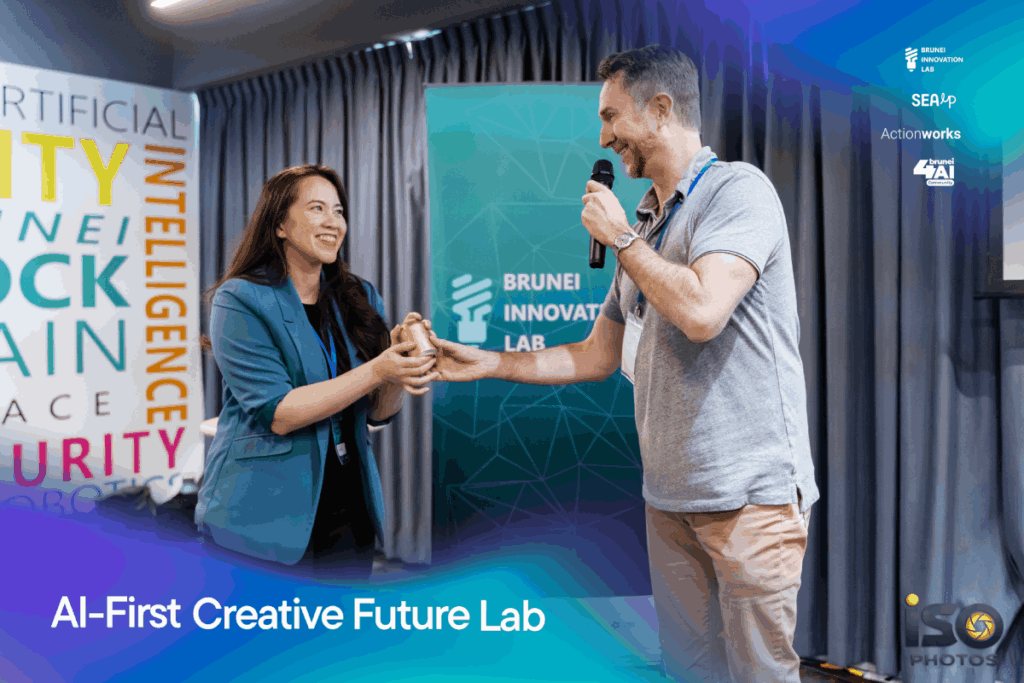
That’s what we built in Brunei. The AI-First Creative Future Lab was a week of programming and coaching that Actionworks ran in April 2026 in partnership with SEA-up, Brunei Innovation Lab, Brunei4AI, and US State Department.
The Program
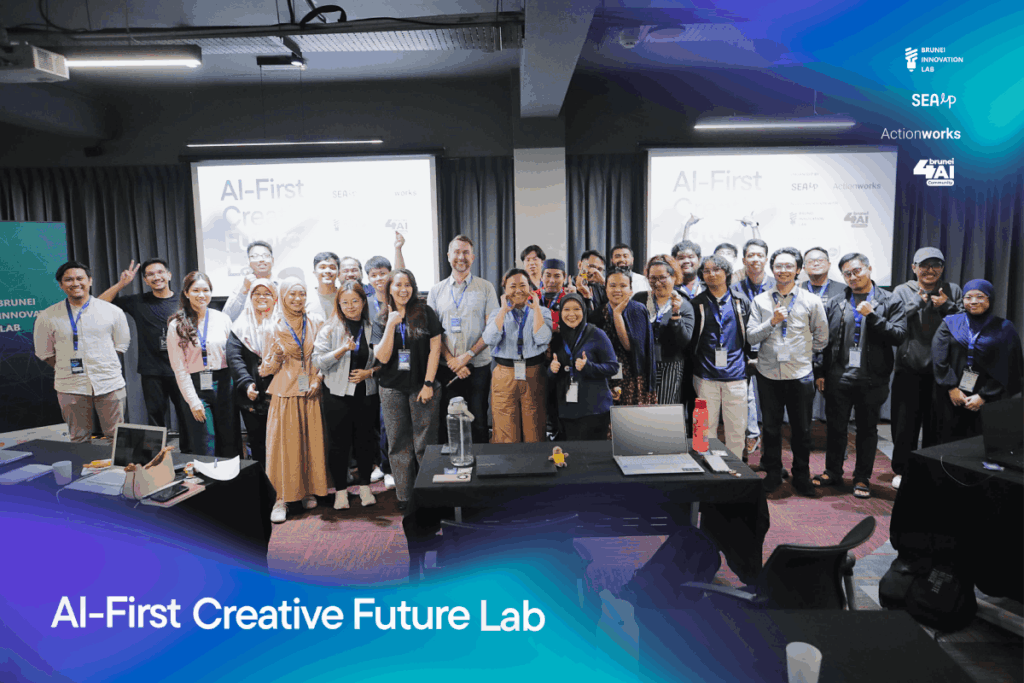
I opened by asking the room a question: “How many of you feel like AI is passing you by?” Twenty of the twenty-four participants raised their hands. That’s the gap Liyana Hanif (founder of SEA-up), and I set out to close with this program.
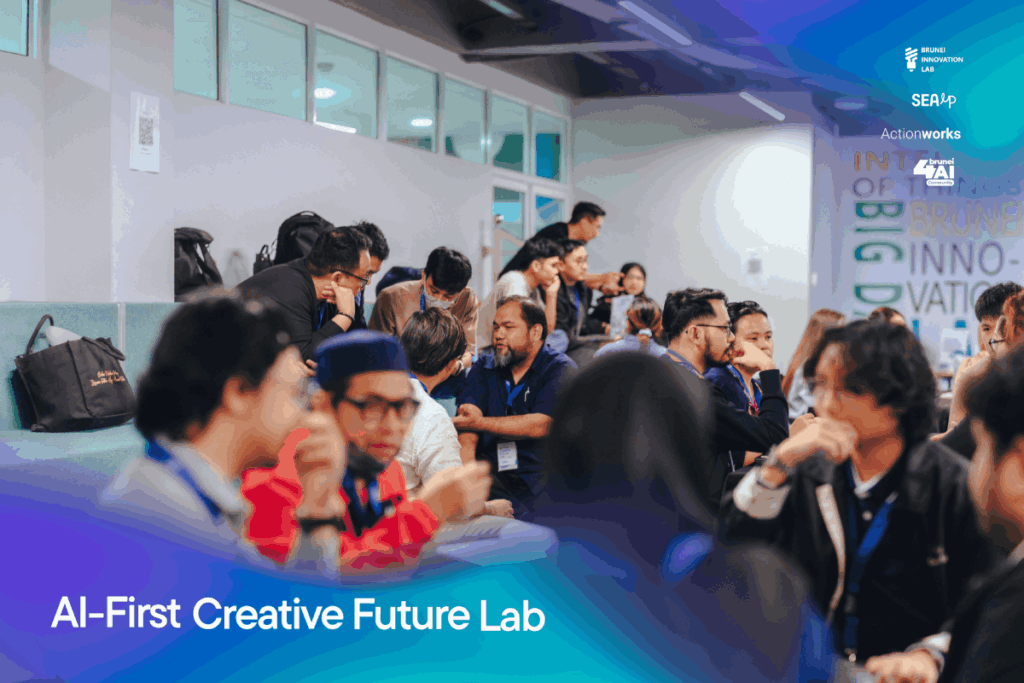
The bootcamp ran Friday evening through Sunday afternoon at the Brunei Innovation Lab. The structure followed the major themes of all Actionworks programs: get people moving fast, applying AI to problems they care about, layered with several rounds of human feedback. And then connect the participants to a capacity-building community that sustains after the program ends.
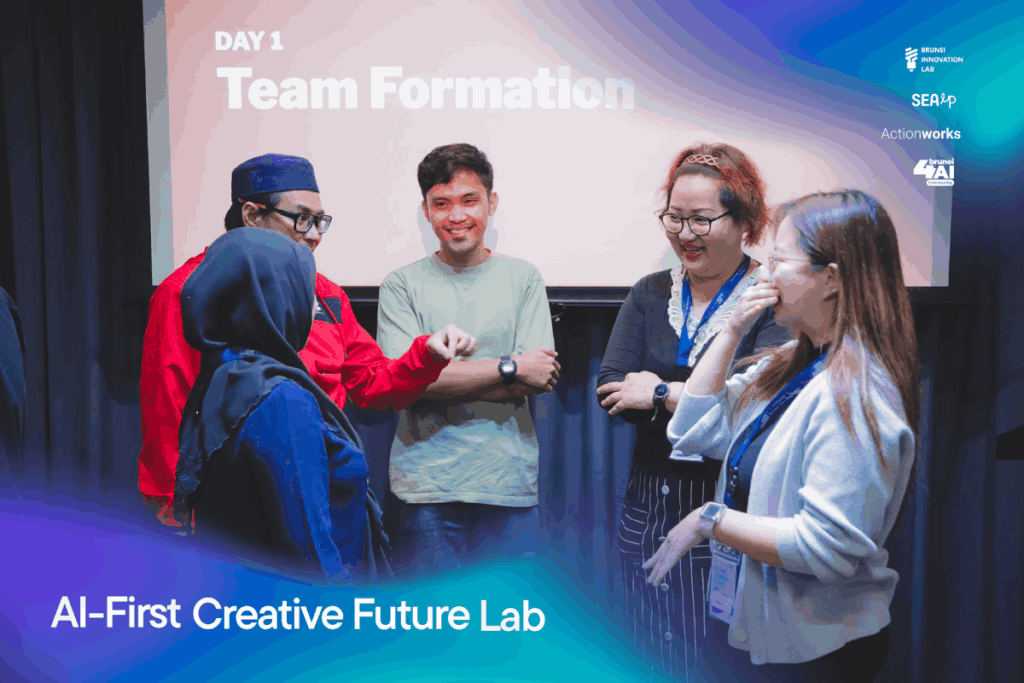
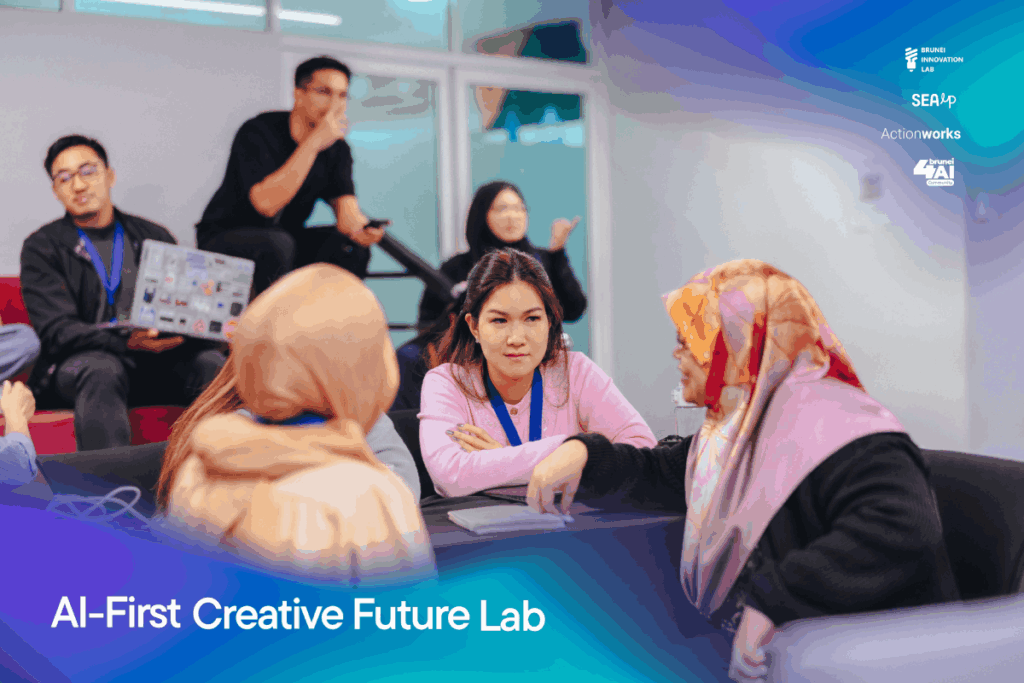
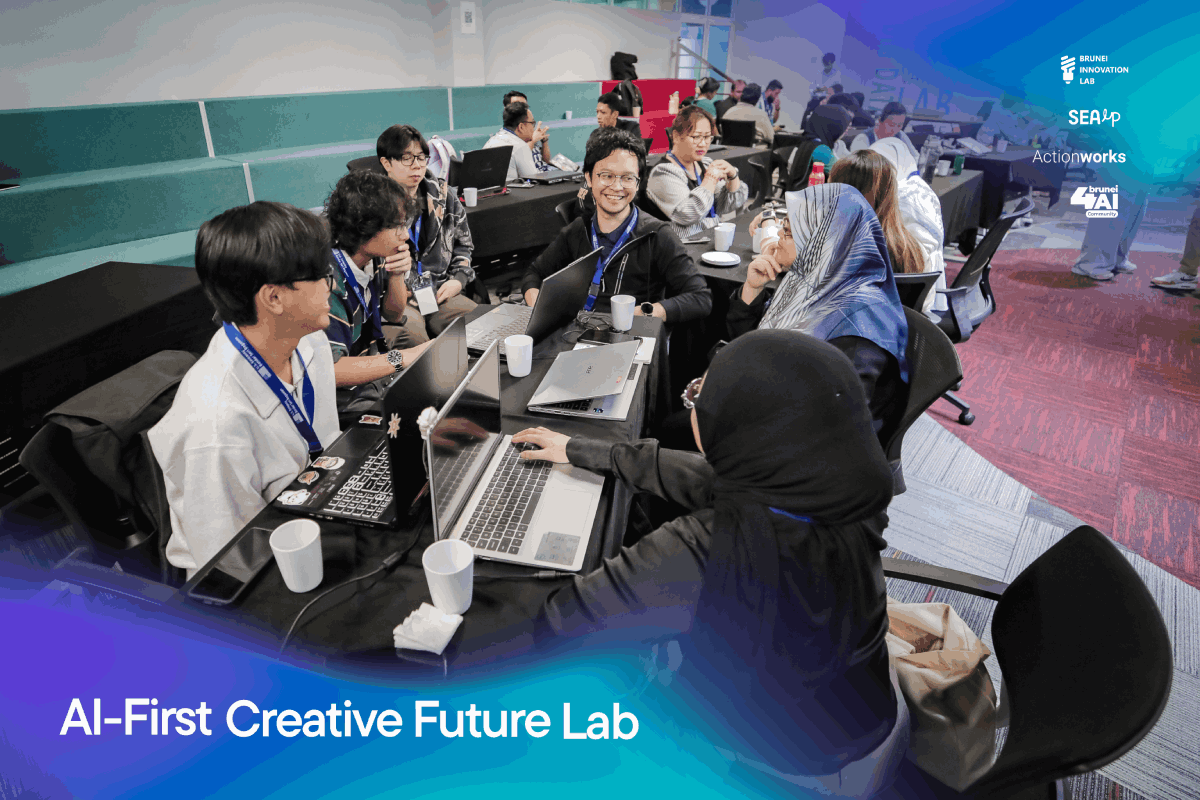
For a participant, it looked like this: bring your best idea to the weekend and pitch it to the room. Form a team, use AI tools like Replit and Lovable to vibe code a prototype, then get feedback from users and guidance from mentors. By the final pitches on Sunday, they’ve gotten multiple rounds of feedback and compressed six months of progress into a weekend.
Day 1
Ideas + Feedback
Lightning Pitches
Team Formation
Day 2
Customer Research
Vibe Coding
Demos
Day 3
Revenue Models
Customer Acquisition
Pitching
What They Built
Five teams built and presented working products in under 48 hours. An e-bike sharing app. A health screening tool. A B2B sourcing platform for food and beverage businesses. An art marketplace. A mobile auction app.
Every project had a revenue model. Every team could articulate who their customer was and how they would reach them. That progression, from a lightning pitch on Friday to a defensible business case on Sunday afternoon, is what the program is designed to produce.
After the Bootcamp
The program didn’t end on Sunday. For the three days that followed, we ran one-on-one coaching sessions with participants who signed up through a scheduling app. This gave us an opportunity to go deeper with founders who had their own projects beyond what their teams built during the weekend, from Iqbal’s AI-powered tool for managing difficult Google reviews, to Jad’s audiobook narrator marketplace, to Laifong’s education platform.
A common thread across these sessions was market access. Brunei is a small country, and for many of these businesses to work at scale, they need to reach customers beyond its borders. We went deep on market entry strategy for neighboring countries and how to position products for a regional audience. That’s not a challenge unique to Brunei. It’s one that small economies everywhere face, and it’s a core part of what Actionworks helps founders navigate.
The demand confirmed something we’ve seen in every market we’ve worked in: the value isn’t just the event itself, it’s the sustained engagement afterward.
What’s Next
We spent time with the Brunei Economic Development Board during the trip, and Actionworks is in early conversations about expanded programming in the country, including AI-focused startup accelerators and fellowship programs designed to bring the best and brightest together and keep them sharing, supporting each other, and strengthening the network over time.
This was our first program in Southeast Asia, and it won’t be the last. The pattern we saw in Brunei is the same one we’ve seen in Mexico, Portugal, and across the U.S.: when you give people the opportunity to put AI into practice at speed, they create momentum for themselves that positions them and their economies for prosperity.
If your AI adoption efforts aren’t working, or you can feel your region falling behind in the face of the next industrial revolution, get in touch.